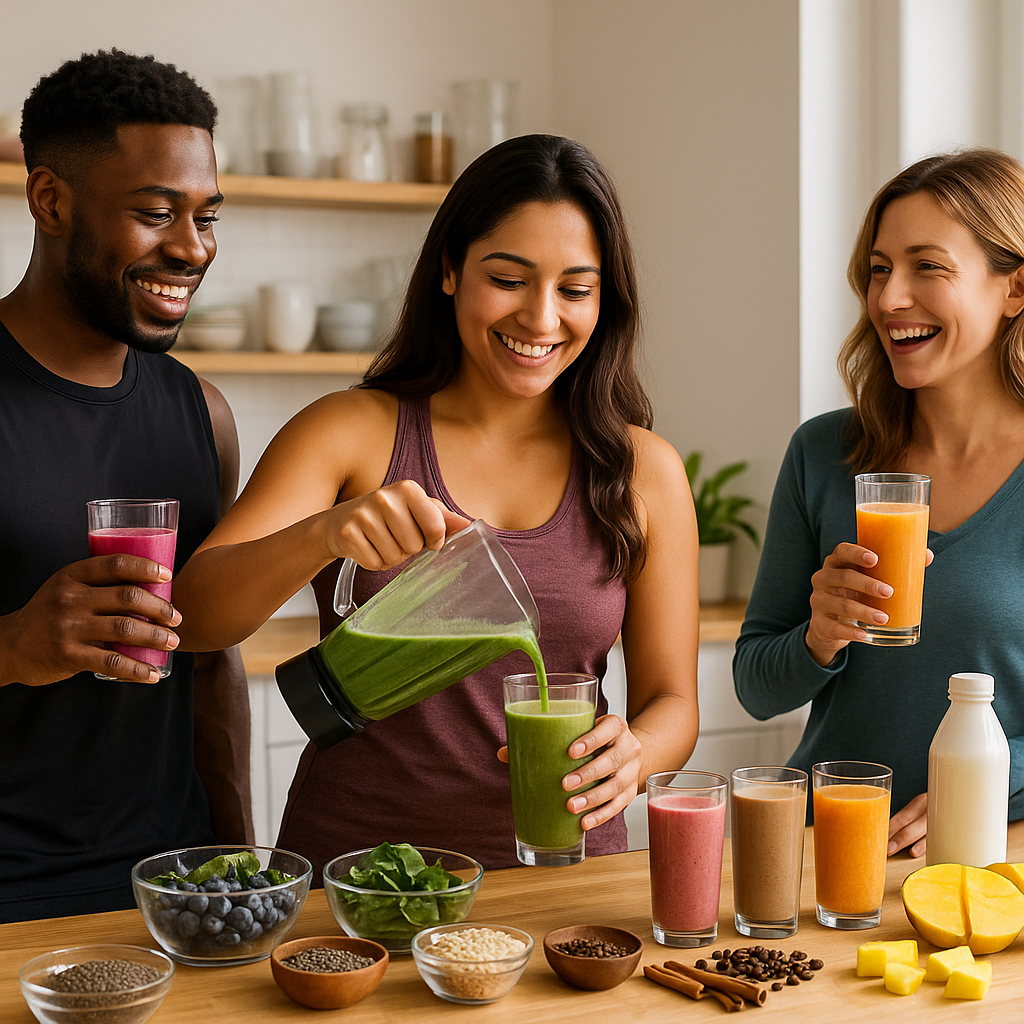
These fat-burning smoothie recipes are built to be satisfying, simple, and realistic for busy mornings. No drink “melts fat” by itself, but the right combo of protein + fiber + fluid + smart carbs can help curb cravings, steady energy, and support a calorie deficit—without feeling deprived. If you also want to improve digestion and fullness signals, our gut health and weight loss guide can help you stack even better results.
Quick note: This article is educational and not a substitute for medical care. See the disclaimer at the end.
What makes a smoothie “fat-loss friendly”?
A fat-loss-friendly smoothie doesn’t chase magic ingredients—it prioritizes satiety and steady energy:
- Protein (20–35 g) may help you feel full and protect lean mass.
- Fiber (≥6 g) supports fullness and gut health.
- Low added sugar helps avoid crashes and rebound hunger.
- Volume + fluid add stomach stretch without many calories.
- Flavor satisfaction (spices, cocoa, citrus, herbs) helps adherence.
The 4–3–2–1 Smoothie Formula
Use this as your plug-and-play template (≈350–400 calories):
- 4: ~1–1½ cups produce (mixed fruit/veg; frozen is fine)
- 3: 30 g protein (Greek yogurt, skyr, kefir, whey/plant protein)
- 2: 2 fiber boosters (chia, flax, oats, psyllium, avocado, greens)
- 1: 1 flavor anchor (cocoa, vanilla, cinnamon, ginger, espresso, lemon)
Add 8–12 oz fluid (water, unsweetened almond milk, kefir, or milk) and ice to taste. Blend 30–60 seconds.
Nutrition note: Macros below are estimates using common grocery items; actual values vary by brand and scoop size. Adjust liquids and ice for preferred thickness.
5 Fat-Burning Smoothie Recipes
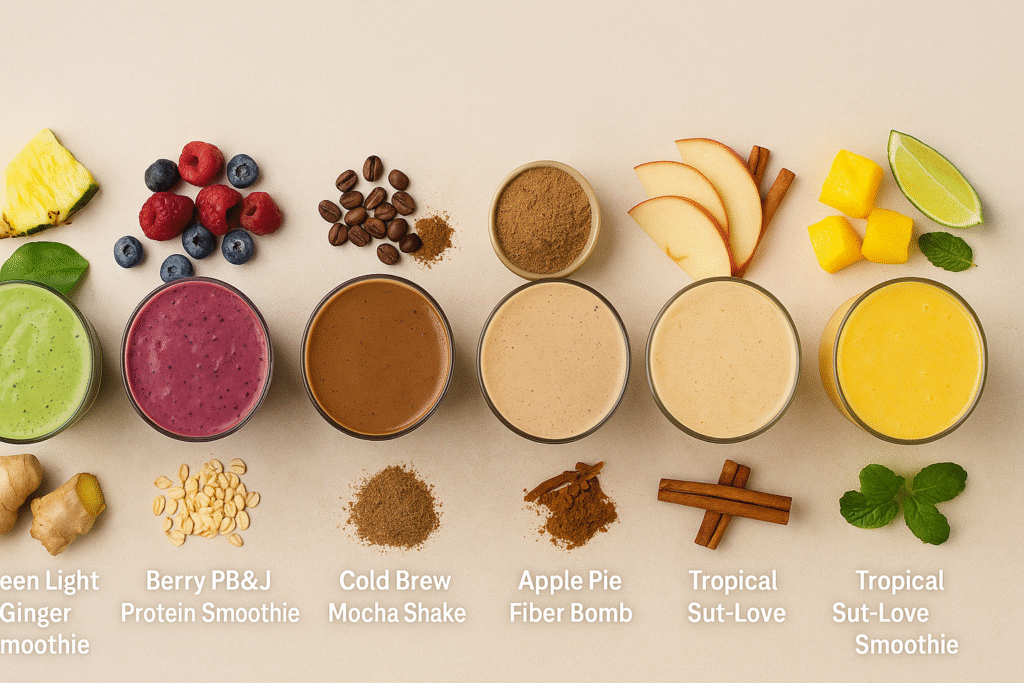
Each recipe makes 1 serving (~16–20 oz). Aim for 350–400 kcal, 20–35 g protein, and 6–12 g fiber.
1) Green Light Ginger Smoothie
Why it works: Spinach + chia deliver fiber and micronutrients; Greek yogurt or whey adds filling protein; ginger brightens flavor.
Ingredients
- 1 cup unsweetened almond milk (or water)
- ¾ cup frozen pineapple chunks
- 1 packed cup baby spinach
- ¾ cup nonfat Greek yogurt or 1 scoop whey/plant protein (≈24–30 g protein)
- 1 Tbsp chia seeds
- ½ tsp fresh grated ginger (or ¼ tsp ground)
- ½ small lime, juiced
- ½ cup ice (optional)
Directions
- Add liquids, then solids to blender.
- Blend until smooth; adjust ice/liquid.
Estimated nutrition (Greek yogurt version): ~360 kcal; 30 g protein; 9 g fiber; 48 g carbs; 7 g fat.
2) Berry PB&J Protein Smoothie
Why it works: Berries are lower-sugar, higher-fiber; peanut butter powder gives flavor with fewer calories; oats add slow-digesting carbs.
Ingredients
- 1 cup unsweetened almond milk
- 1 cup frozen mixed berries
- 1 scoop vanilla whey/plant protein (≈24–30 g protein)
- 2 Tbsp powdered peanut butter (PB powder)
- 2 Tbsp rolled oats
- ½ tsp vanilla extract
- Ice as needed
Directions
- Blend milk + protein first to avoid clumps.
- Add remaining ingredients; blend until creamy.
Estimated nutrition: ~370 kcal; 32 g protein; 10 g fiber; 42 g carbs; 9 g fat.
3) Cold Brew Mocha Shake
Why it works: Coffee + cocoa for rich flavor with minimal sugar; whey or soy isolate boosts protein; flax adds fiber and omega-3 ALA.
Ingredients
- ¾ cup strong cold brew coffee (unsweetened)
- ½ cup unsweetened almond milk
- 1 frozen small banana (or ¾ cup riced cauliflower for lower carb)
- 1 scoop chocolate whey/plant protein (≈24–30 g protein)
- 1 Tbsp ground flaxseed
- 1 Tbsp unsweetened cocoa powder
- Pinch cinnamon + tiny pinch salt
- Ice to thicken
Directions
- Add liquids, then powders, then fruit/ice.
- Blend 45–60 seconds.
Estimated nutrition (banana version): ~340 kcal; 32 g protein; 7 g fiber; 38 g carbs; 8 g fat.
Caffeine note: Consider mornings or early afternoon. If caffeine disrupts your sleep, see our plan in Sleep and Weight Loss: The Hidden Link + 7-Day Reset Plan.
4) Apple Pie Fiber Bomb
Why it works: Oats + apple + psyllium (optional) pack viscous fiber that can help fullness. Kefir contributes protein and live cultures.
Ingredients
- 1 cup plain low-fat kefir or milk + ¼ cup skyr
- 1 small apple (cored; leave peel on)
- 2 Tbsp rolled oats
- 1 tsp psyllium husk (optional; start with ½ tsp)
- ½ tsp cinnamon + pinch nutmeg
- 1 tsp almond butter (for richness)
- ½ tsp vanilla extract
- ½–1 cup ice
Directions
- Blend kefir + dry ingredients first; let sit 2 minutes (hydrates fiber).
- Add apple and ice; blend smooth.
Estimated nutrition (with kefir, no psyllium): ~370 kcal; 25 g protein; 11 g fiber; 47 g carbs; 9 g fat.
5) Tropical Gut-Love Smoothie
Why it works: Pairing kefir/yogurt with tropical fruit gives a tangy-sweet profile; flax and avocado add fiber and creaminess without excess sugar.
Ingredients
- ¾ cup plain kefir or ¾ cup nonfat Greek yogurt + ¼ cup water
- ½ cup frozen mango chunks
- ½ cup frozen papaya or pineapple
- 1 Tbsp ground flaxseed
- ¼ small ripe avocado
- 1 tsp fresh lime juice + a few mint leaves
- Ice as needed
Directions
- Add all ingredients to blender; blend until silky.
- Thin with cold water if needed.
Estimated nutrition (kefir version): ~355 kcal; 24 g protein; 8 g fiber; 44 g carbs; 10 g fat. For a deeper dive on why fiber and fermented foods can support fullness, check How Gut Health Affects Weight Loss (And How to Fix It).
Smart swaps (dairy-free, low-carb, higher-fiber)
- Dairy-free: Use soy isolate, pea protein, or collagen + soy milk combo. For tang, try coconut kefir (unsweetened).
- Lower-carb: Swap half the fruit for zucchini, cucumber, riced cauliflower, or extra spinach. Use PB powder instead of nut butter.
- Higher-fiber: Add 1 tsp psyllium or an extra Tbsp chia/flax. Increase fluids accordingly.
- Higher-protein: Add ½ scoop more protein or use skyr/Greek yogurt plus a scoop.
- Lower-calorie: Keep flavor high with spices, citrus, herbs; reduce calorie-dense add-ins (oils, nut butters). If stress cravings are sabotaging you, these 7 ways stress hormones affect weight loss can point you to quick fixes.
Grocery list & prep tips
Produce (frozen works great): Mixed berries, pineapple, mango, papaya, bananas, apples, spinach, zucchini/cauliflower (optional), ginger, limes, fresh mint.
Proteins: Nonfat Greek yogurt, skyr, plain kefir, whey/soy/pea protein (unsweetened).
Fiber boosters: Chia, ground flaxseed, rolled oats, psyllium husk.
Flavors: Cocoa powder, cinnamon, vanilla, espresso/cold brew.
Liquids: Water, unsweetened almond/soy milk, dairy milk if preferred.
Batching:
- Pre-portion freezer packs (fruit/veg/spices) in zip bags; add liquid + protein day-of.
- Keep chia/flax in airtight jars.
- Wash blender immediately—add warm water + drop of soap, blend 10 seconds.
Portion guardrails (per serving): fruit 1–1½ cups max; nut butter 1 tsp–1 Tbsp; oats 1–3 Tbsp; seeds 1–2 Tbsp; avocado ¼ small.
Internal resources from Trim & Stamina
- /weight-loss/ — Weight Loss: The Complete Guide (pillar)
- /diet-nutrition/high-protein-diet/ — High-Protein Diet: How to Do It Safely (sibling)
- /recipes/high-protein-breakfasts/ — 15 High-Protein Breakfasts Under 400 Calories (sibling)
- /reviews-weight-loss/mitolyn-review/ — Mitolyn Review: Ingredients, Evidence, Pros & Cons
FAQs
1) Are smoothies good for weight loss?
They can be when they’re high in protein and fiber and controlled in calories. Use the 4–3–2–1 formula to stay full and on track.
2) Is fruit sugar a problem?
Whole fruit includes fiber, water, and micronutrients. Keep portions reasonable (1–1½ cups fruit per smoothie) and pair with protein.
3) What’s the best protein powder for smoothies?
Whey and soy isolates mix smoothly and are rich in essential amino acids. Pea blends are good dairy-free options. Choose unsweetened when possible.
4) Can I make these the night before?
Yes. Store in a sealed jar in the fridge up to 24 hours. Shake and add ice before drinking. Chia/psyllium will thicken—add a splash of liquid.
5) Do I need greens in every smoothie?
No, but adding a cup of spinach or zucchini boosts volume and micronutrients for very few calories.
References
- MedlinePlus (NIH/NLM) — Dietary Fiber: https://medlineplus.gov/dietaryfiber.html
- NIDDK (NIH) — Your Digestive System & How It Works: https://www.niddk.nih.gov/health-information/digestive-diseases/digestive-system-how-it-works
- NCCIH (NIH) — Probiotics: What You Need to Know: https://www.nccih.nih.gov/health/probiotics-what-you-need-to-know
- ODS (NIH) — Protein Fact Sheet (Consumer): https://ods.od.nih.gov/factsheets/Protein-Consumer/
Medical Disclaimer: This content is for educational purposes and does not replace personalized medical advice.