Feeling like you’re doing everything right but your weight still won’t move?
You’re not alone — and in most cases, it all comes down to a single, simple concept: the calorie deficit.
Understanding how calorie balance works is the foundation of every sustainable fat-loss approach.
This guide breaks down what a calorie deficit is, how it affects your body, and how to create one safely without harming your metabolism or energy.
What a Calorie Deficit Actually Means
A calorie deficit happens when you consume fewer calories than your body burns.
When this happens, your body draws on stored energy — primarily body fat — to meet its needs.
According to the Centers for Disease Control and Prevention (CDC), safe and sustainable weight loss typically means losing 1–2 pounds per week through a moderate calorie reduction and increased activity.
A moderate calorie deficit promotes steady, healthy progress and minimizes fatigue, cravings, and muscle loss.
Why Metabolism Matters
Metabolism is more than calorie math — it’s the set of processes that turn food into energy.
When you eat less, your metabolism adapts to conserve energy — a normal survival mechanism.
Hormones such as leptin, ghrelin, and thyroid hormones regulate these adaptations.
Extreme restriction can cause hormonal imbalance, fatigue, and slower fat loss.
The National Institutes of Health (NIH) emphasizes that gradual adjustments are better for long-term metabolic stability.
How to Create a Safe, Effective Calorie Deficit
1. Estimate Your Maintenance Calories
Multiply your body weight (in pounds) by 12–15 to find your maintenance range.
That’s roughly how many calories you need to maintain your current weight.
2. Subtract Moderately
Start with 300–500 calories below maintenance — enough to see progress without exhaustion.
3. Prioritize Protein
Protein preserves lean muscle mass and improves satiety.
Aim for 0.7–1.0 g per pound of body weight.
4. Stay Active
Combine resistance training with walking, cycling, or swimming.
According to the Harvard School of Public Health, physical activity prevents muscle loss and maintains energy expenditure.
5. Monitor & Adjust
If your weight stalls for three weeks, lower intake slightly or add light activity.
To protect strength while cutting, read our guide on how to maintain muscle in a calorie deficit.
Macronutrient Ratios That Work
| Macronutrient | Recommended % | Function |
|---|---|---|
| Protein | 25–35% | Builds and preserves muscle |
| Carbohydrates | 35–45% | Primary energy source |
| Fats | 20–30% | Hormone balance and brain function |
Sample Day (~1,800 kcal)
| Meal | Example Foods | Calories |
|---|---|---|
| Breakfast | Greek yogurt, berries, almonds | 400 |
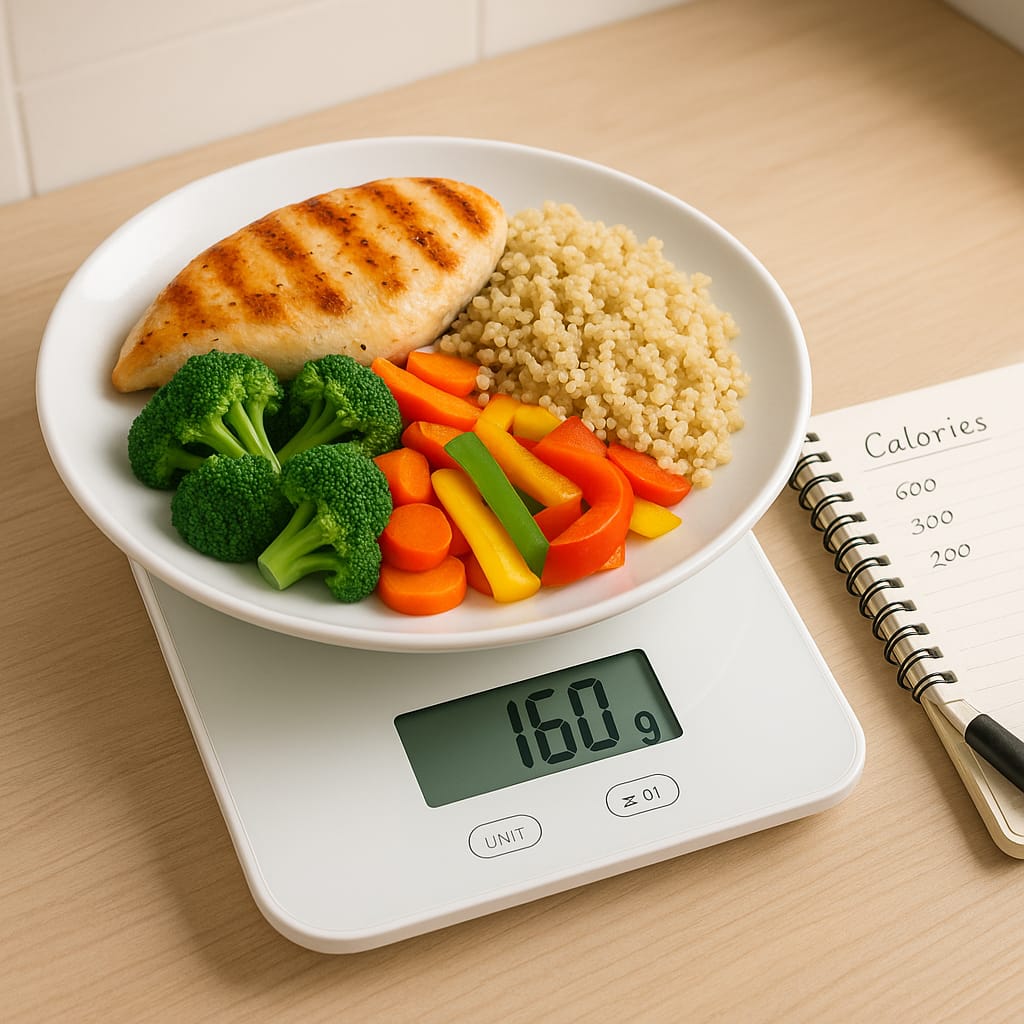
| Lunch | Chicken, quinoa, veggies, olive oil | 550 |
| Snack | Apple with peanut butter | 250 |
| Dinner | Salmon, rice, broccoli | 600 |
💧 Hydration helps appetite control — aim for 2–3 liters daily.
Common Mistakes During a Calorie Deficit
- Over-restricting calories → fatigue and rebound eating
- Skipping resistance training → muscle loss
- Sleeping less than 7 hours → increased hunger
- Ignoring micronutrients → slower metabolism
- Expecting instant results → discouragement
How the Body Adapts to Calorie Restriction
Your body responds to lower intake by:
- Moving less subconsciously
- Producing more hunger hormones
- Using calories more efficiently
This is called adaptive thermogenesis.
Avoid it by taking small deficits, keeping protein high, and adding “diet breaks” every few months.
For more on metabolic adaptation, see this NIH article on energy balance.
Signs Your Deficit Is Working
- Weight decreases gradually (0.5–1%/week)
- Mild hunger between meals
- Steady energy and good mood
- Clothes fit better
If you feel constantly drained or irritable, your deficit might be too large.
Sustainable Fat-Loss Habits
- Build meals around whole, minimally processed foods.
- Strength train at least 2–3× per week.
- Get 7–9 hours of sleep consistently.
- Stay patient — results compound slowly.
For a deeper dive, check our upcoming article:
➡️ [“10 Signs Your Calorie Deficit Is Too Aggressive”] (internal link placeholder)
Scientific Evidence
- NIH: Moderate calorie restriction improves metabolic biomarkers.
- PubMed (2021): Protein intake helps preserve lean mass during dieting.
- CDC: Sustainable fat loss = 1–2 pounds per week.
- Harvard Health: Metabolism adapts naturally to reduced intake.
These studies reinforce that moderation and consistency outperform quick-fix diets.
Pros and Cons
| Pros | Cons |
|---|---|
| Evidence-based, predictable results | Requires planning and patience |
| Improves insulin sensitivity | Temporary hunger or fatigue |
| Encourages mindful eating | Progress plateaus can occur |
| Long-term habit formation | Too much restriction harms performance |
Safety First
A calorie deficit is safe for most healthy adults but not advised for:
- Pregnant or breastfeeding individuals
- People with eating disorders or metabolic diseases
- Those on medication affecting appetite
Always consult a healthcare professional before major dietary changes.
FAQ
1. What’s the ideal calorie deficit?
A 300–500 kcal/day deficit is ideal for steady fat loss.
2. Will my metabolism slow down?
Slightly, but resistance training and high protein minimize it.
3. How long should I stay in a deficit?
8–12 weeks, followed by a short maintenance phase.
4. Do I need to track calories forever?
Not necessarily — portion awareness often replaces counting over time.
5. What’s the best way to maintain results?
Gradually increase calories and stay active to find your new maintenance level.
Key Takeaways
- A calorie deficit is the foundation of fat loss.
- Small, steady deficits are more sustainable.
- Prioritize sleep, strength training, and protein.
- Avoid extremes — balance builds consistency and trust in your body.
Want a practical plan to keep muscle while you cut? Explore how to maintain muscle in a calorie deficit.
Final Thoughts
A calorie deficit isn’t about punishment or deprivation — it’s about balance.
When done right, it teaches you how to fuel your body efficiently while still enjoying food.
Progress comes from patience, awareness, and daily habits — not shortcuts.
Disclaimer:
This content is for educational purposes only and does not replace professional medical advice.